
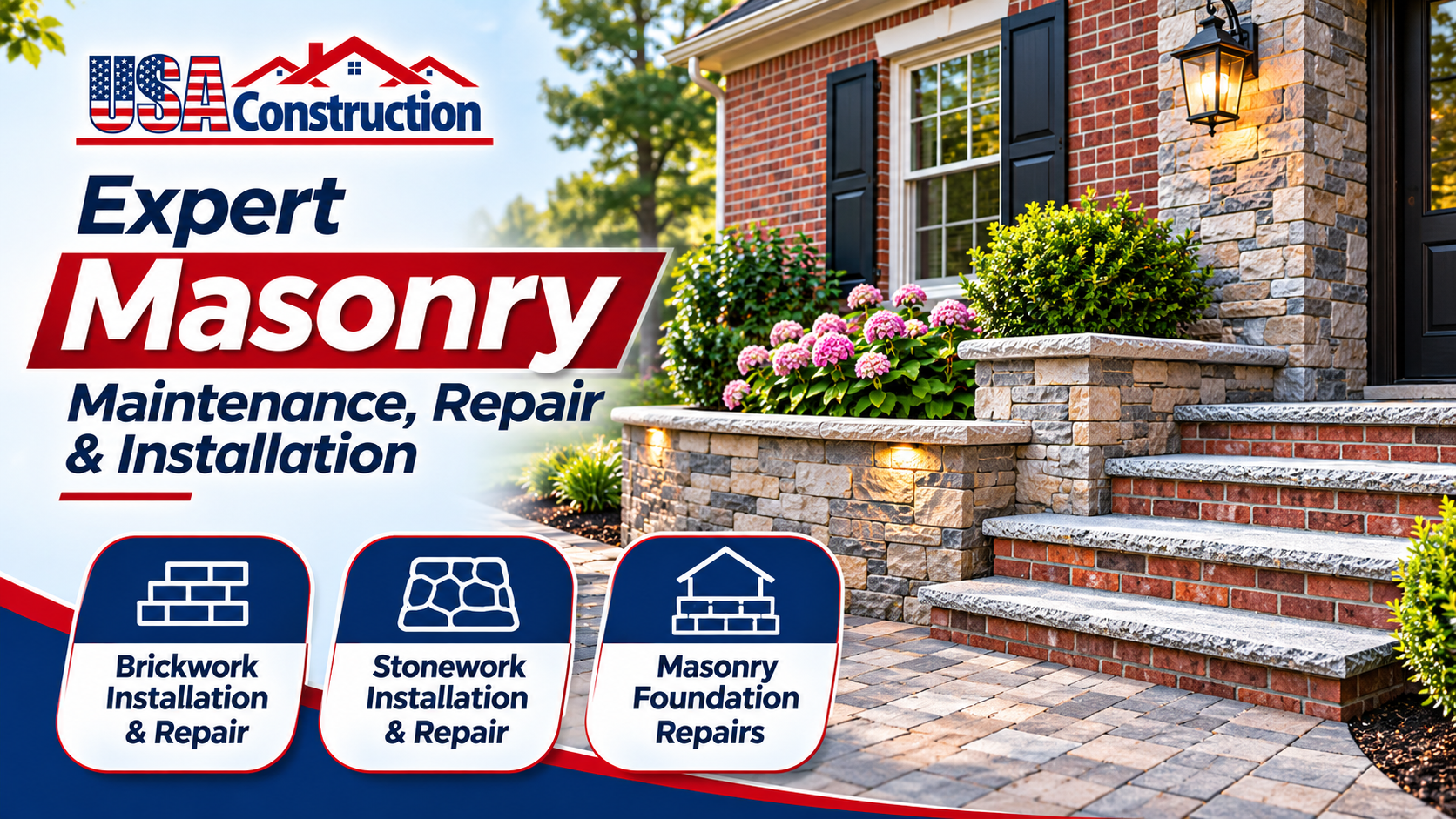
Masonry services in New Jersey enhances the durability, strength and aesthetic appeal of properties.
The deterioration of brickwork, stonework and masonry foundation may be attributed to the impacts of moisture, temperature changes and continuous exposure to the elements.
The sooner such degeneration is seen, the more easily the problem may be dealt with before it becomes overwhelming. This guide looks at frequent problems with masonry, expert installation and maintenance advice for both commercial and residential properties all across New Jersey.
How Your Property Is Protected by Timely Masonry Repairs
The state of the property could suffer as a result of damage in the stone work, brick work, and joint work. It would be possible for moisture to enter the joints that have been weakened and other openings in case such degradation is not taken care of. There might be signs of a structural problem which would require attention from experts.
Degradation fix of the masonry would help avoid any future degradation and repair that would otherwise be unnecessary. It is possible to find out about the problems of the masonry, and also preserve the masonry through regular inspections and maintenance.
Expert Masonry Maintenance, Repair & Installation
Masonry requires the right materials, and even installation and repairs should be done in consideration of the condition of the current building. At USA Construction LLC, there are masonry services for both residencial and commercial properties such as brick and stone works as well as foundation restoration. If it is about constructing masonry or fixing any damage to a structure, the best decision depends on the requirements of the building and the workload involved.
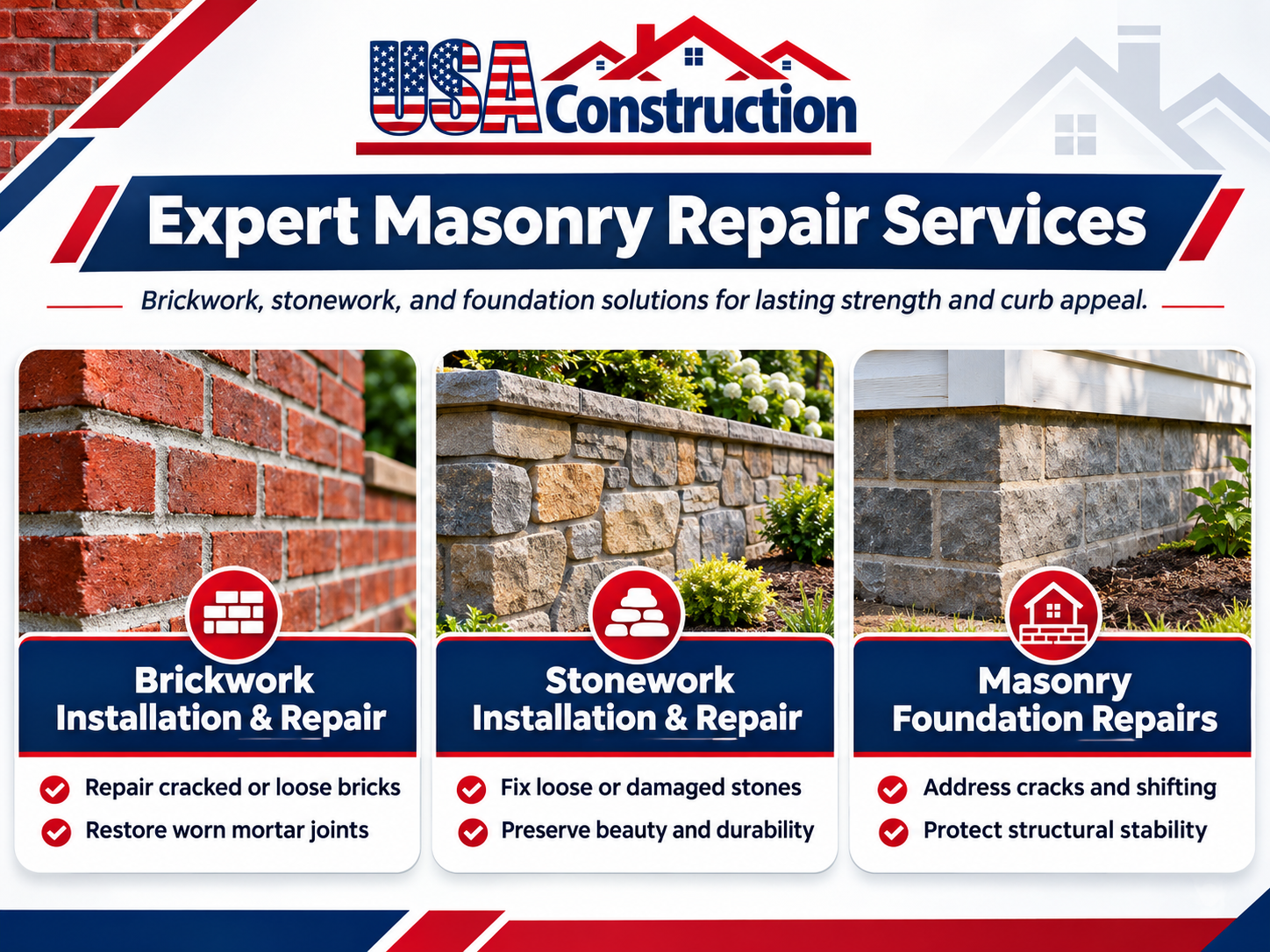
Brickwork Installation & Repair
Brickwork is employed in many elements of architecture for its durability and aesthetic appeal to masonry constructions. The bricks may eventually crack and loosen, and the mortar between them may degrade from humidity and weathering.
If the damage is bad enough it will need to be repaired. The deterioration of the mortar joints may cause a number of problems, and in some situations it may also be required to repair the damaged regions or replace the broken bricks.
Installation & Repair of Stonework
Stone masonry can offer buildings and landscape features a distinct character and enduring appeal. However, exposure to the elements and decay of the material might affect its condition and aesthetics negatively. Any visible openings, cracks between joints, loose or damaged stones would be considered reasons to make repairs.
Repairs for Masonry Foundations
Masonry foundations support weight so the property owner should be aware of the state of the masonry. Signs of trouble that should be investigated include the shifting of the masonry, deteriorating mortar, cracks and the changing condition of the foundation wall.
However, not all cracks are created equal and hence will not require the same treatment procedures. Some of the fractures may be due to material degradation, but there are others which may suggest movement or settlement which should be explored further.
Frequently Asked Questions (FAQs)
What causes stair step cracks along brick mortar lines in New Jersey homes?
Stair step cracks usually mean the ground beneath your foundation is shifting or settling unevenly. Heavy seasonal rain saturates clay soil around the home, causing the foundation to sink slightly in isolated spots. When the foundation drops, that physical stress travels upward, snapping the weakest link in the wall; the mortar joints between the bricks. If these cracks grow wider than a quarter inch, a structural mason in NJ needs to inspect the foundation before the brick wall pulls apart.
How can you tell if cracked brick mortar is a minor cosmetic repair or a structural emergency?
Thin hairline cracks running straight across a single mortar joint are usually superficial, caused by routine building expansion or normal concrete shrinkage. A structural issue looks very different: wide stair-step cracks, horizontal splits along basement block walls, bricks physically bulging outward, or interior drywall cracking near exterior door frames. If doors begin sticking shut or water actively leaks through the crack during heavy rain, you need a professional evaluation immediately.
Why is white powder forming on my brick chimney and outdoor walls?
That powdery residue is efflorescence, created when groundwater or rain soaks deep into porous brick and mortar. As the water evaporates toward the surface, it leaves behind dissolved natural mineral salts. While the powder itself won’t hurt the brick, it is a clear warning sign that water is trapped inside your wall. Cleaning it off with a stiff brush fixes the look, but you still need to seal open mortar joints and repair roof flashing to stop the leak.
Can crumbling brick mortar be fixed without rebuilding the entire wall?
Yes, through a process called tuckpointing or repointing. NJ masons carefully grind out the top inch of soft, decayed mortar without disturbing the surrounding bricks, clean out the dust, and pack fresh, high-density mortar tightly into the joints. This restores water resistance and load-bearing strength to the wall for decades, saving you from the massive expense of a full teardown.
Why do front stone steps start pulling away from the house after winter?
Entry stoops pull away when their sub-foundation was not poured deep enough below the local frost line, or when roof runoff pools directly around the base of the steps. During cold New Jersey freezing snaps, waterlogged dirt under the stoop expands into ice, lifting the steps upward and outward. When spring arrives and the ice melts, the stoop settles unevenly, leaving a dangerous gap between the steps and the house foundation.
How does freeze thaw damage break apart outdoor brickwork every winter?
Brick and mortar act like dense sponges that soak up rainwater. When winter temperatures drop below thirty-two degrees, that trapped moisture turns to ice and expands by about 9%. That sudden internal expansion cracks mortar joints from the inside out and pops the hard protective face right off the brick face; a damage pattern known as spalling. Once the outer face chips off, soft inner clay is exposed, making the brick crumble rapidly.
What causes basement foundation walls to bow inward, and how is it repaired?
Basement walls bow inward when rain-soaked dirt outside expands and pushes hard against the masonry, creating extreme lateral hydrostatic pressure. If gutter downspouts dump water right next to the foundation wall, the soil weight increases dramatically. Masonry specialists repair bowing foundation walls by anchoring structural steel I-beams or carbon fiber straps to the inside wall while excavating outside to install proper subsurface drainage pipes.
Should you use a power washer to clean dirt off old residential brickwork?
No, using high-pressure power washers on older or historic brick is a huge mistake. High pressure strips away the hard outer glaze of fired clay, leaving soft, porous inner brick exposed to weather. It also gouges out soft mortar joints and forces gallons of water deep into hidden wall cavities, which rots wooden wall studs and causes severe mold growth inside your home. Low-pressure washing with mild masonry cleaners is the only safe method.
What is the difference between a penetrating sealer and standard exterior paint for outdoor brick?
Standard exterior paint lays a rubbery plastic film over the brick surface, trapping internal moisture vapor behind the wall until the paint bubbles, peels, and rots the masonry underneath. A penetrating silane-siloxane sealer absorbs deep into the pores, chemically bonding beneath the surface to block liquid rainwater while letting internal moisture vapor escape freely. This keeps the brick dry without peeling or changing the original color.
How can homeowners prevent leaning stone retaining walls from collapsing into the yard?
Retaining walls lean when trapped groundwater builds up behind the stone with nowhere to go. To prevent a total collapse, the wall needs functional weep holes along the bottom and a thick bed of crushed gravel behind the stones with a perforated drain pipe. Masons can dismantle a leaning wall section, clear out packed mud, install proper drainage rock, and rebuild the wall on a level footing to release water pressure.
What services does USA Construction LLC offer for damaged brick, stone, and foundations in New Jersey?
USA Construction LLC handles full-service residential and commercial masonry repairs across New Jersey, specializing in brick tuckpointing, historic stonework restoration, bowing foundation wall stabilization, concrete stoop rebuilding, chimney repair, and custom patio or retaining wall installation. Our team diagnoses root causes like poor site drainage and structural settling, delivering permanent masonry repairs tailored to your property.
How much does brick tuckpointing cost per square foot, and what factors change the price?
Tuckpointing costs depend on wall height, accessibility, scaffolding requirements, and the hardness of the existing mortar. Working on high chimney stacks or multi-story walls requires safety rigging, which increases labor costs. Matching historical mortar colors and hand-carving custom joints also adds detail work, but routine ground-level tuckpointing remains one of the most cost-effective ways to extend a brick building’s lifespan.
Why do hairline cracks form on concrete driveways and stone walkways shortly after installation?
Hairline surface cracks happen as concrete or mortar cures and loses water volume, shrinking slightly during the drying process. Extreme summer heat or dry wind speeds up surface drying, creating small tension cracks on top while the base is still wet. Using proper expansion joints, keeping fresh concrete damp during curing, and applying quality sealer minimizes these surface shrinking cracks.
Can crumbling concrete garage floors and patio slabs be resurfaced without pouring new concrete?
Yes, if the underlying concrete slab remains structurally sound and hasn’t settled unevenly, masons can grind away pitted, flaking surface areas and apply a polymer-modified concrete overlay or micro-topping. This creates a fresh, smooth, non-porous floor at a fraction of the cost and disruption of ripping out and re-pouring a thick concrete slab.
What is brick spalling and why should chipped bricks be replaced quickly?
Spalling happens when water trapped inside a brick freezes and pops off its hard outer shell. Once the outer surface breaks, the inner clay acts like an open sponge, soaking up even more rainwater during every storm. If you don’t replace spalled bricks, water will travel sideways into adjacent bricks and mortar joints, causing entire sections of the wall to crumble.
How does poor gutter downspout placement ruin stone walkways and stoops?
When downspouts dump heavy roof runoff directly onto stone steps or paver walkways, the rushing water washes away joint sand, erodes underlying crushed stone bases, and saturates the masonry. In winter, this concentrated water turns into thick ice sheets that crack steps and shift pavers out of place. Downspouts should always discharge water at least 5 feet away from all masonry features.
Is it better to repair or replace crumbling front entrance brick steps?
If only a few bricks are loose and the concrete base underneath is solid, a mason can tuckpoint the joints and reset the displaced capstones. However, if the steps are leaning, sinking into the dirt, or pulling away from the house foundation, the sub-base has failed. In that case, tearing down the steps and pouring a new concrete footing below the frost line is the only way to build a safe, long-lasting entrance.
How often should outdoor bluestone, flagstone, and paver patios be sealed in North Jersey?
Outdoor natural stone and paver patios in North Jersey should be sealed every 2 to 3 years. Heavy foot traffic, winter snow melt, and road salt wash-off protective sealers over time. Re-sealing prevents oil stains, keeps joint sand from washing away, blocks moss and weed growth, and shields stone surfaces from freeze-thaw pitting.
Why do historic brick homes require specialized soft mortar instead of standard modern cement?
Historic bricks fired before the early 20th century are significantly softer and more porous than modern industrial bricks. Standard modern Portland cement dries rock-hard and rigid; when a historic wall shifts or expands in heat, the hard modern mortar crushes the softer old bricks. Historic masonry requires high-lime, flexible mortar that allows old bricks to breathe and move without snapping.
What spring maintenance steps protect outdoor masonry after a hard winter?
Walk around your property every spring to check for crumbling mortar, flaking bricks, loose step capstones, and white salt stains. Rinse off leftover winter road salt with a garden hose, clear leaves and dirt out of patio joints, clean out clogged downspouts, and schedule a professional mason to tuckpoint open mortar cracks before heavy summer thunderstorms hit.
Contact Us Today!
Visible deterioration, issues with moisture, and the state of the existing materials must all be taken into consideration when maintaining masonry. Knowing the magnitude of the project is a crucial first step, whether you are planning new brickwork, need stonework repairs, or have concerns about a masonry foundation.
USA Construction LLC provides masonry services for residential and commercial properties throughout New Jersey. Contact the company today to discuss your masonry project, arrange a consultation, and request a free estimate for your work!