An outdoor space can lift the look of a property, give you more room to relax, host friends and do everyday tasks.
Hardscaping brings elements such as patios, paving, retaining walls and stones that help make a space both useful and beautiful.
Hardscaping components are vital for homeowners in New Jersey because many things must be thought about, such as yard design, drainage, materials and how the space will be used. Hardscaping is not just decoration; it is a solution that can transform an outdoor space into a place you enjoy.
How Hardscaping Can Improve Your Property
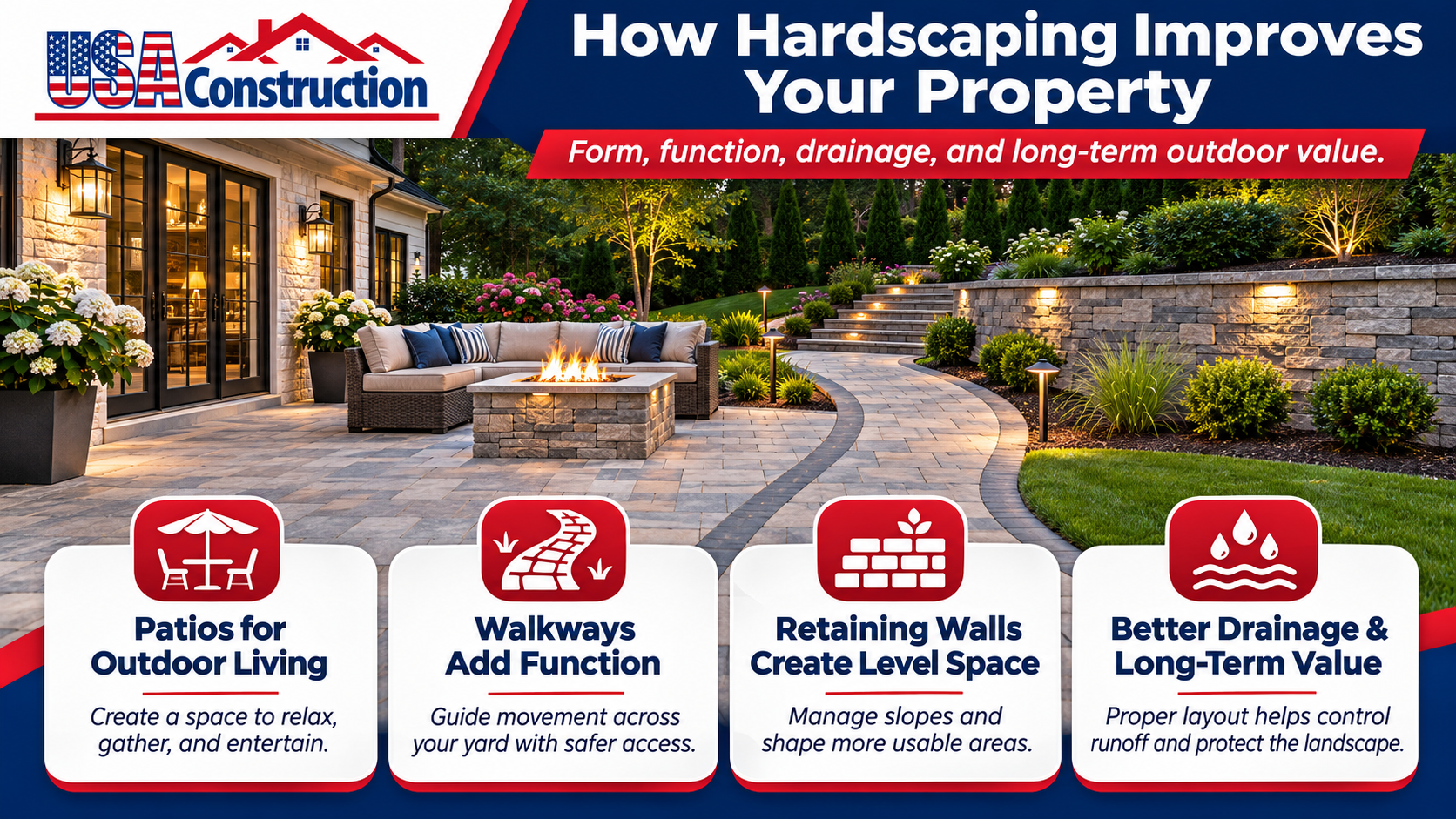
The hardscape will provide you form and purpose for your space, and will compliment the design of your home. The patio is the outdoor meeting space and the concrete walks will allow you to easily travel from one end of your garden to the other. Leveling of the landscape will be done by retaining walls.
Proper hardscaping will also contribute to water drainage. Choose the proper materials and lay them out in the ideal places to convert your uneven outdoor area into a usable one. This will give you a long-lasting landscape for a lifetime!
Professional Hardscaping Services for Outdoor Improvements
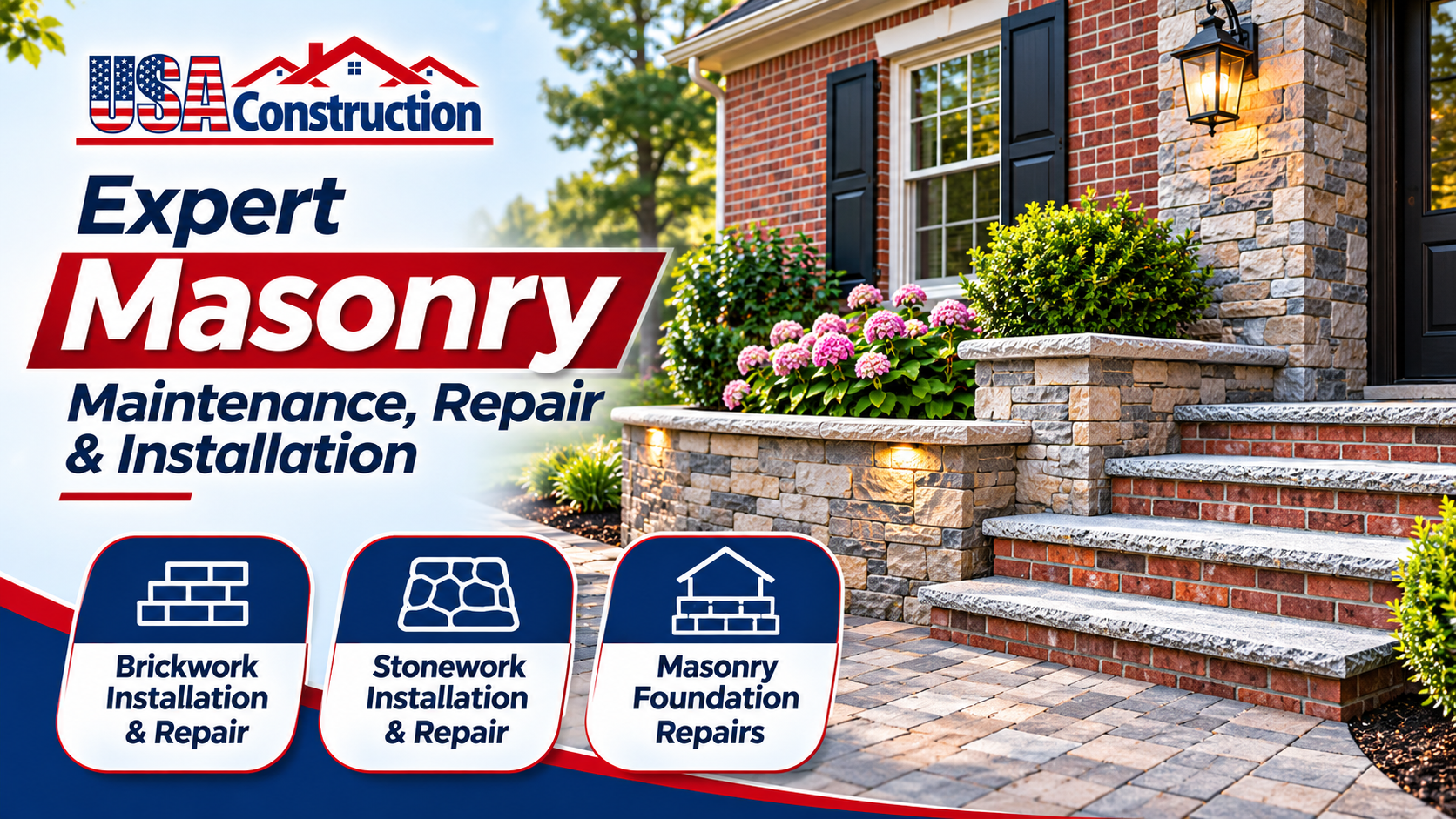
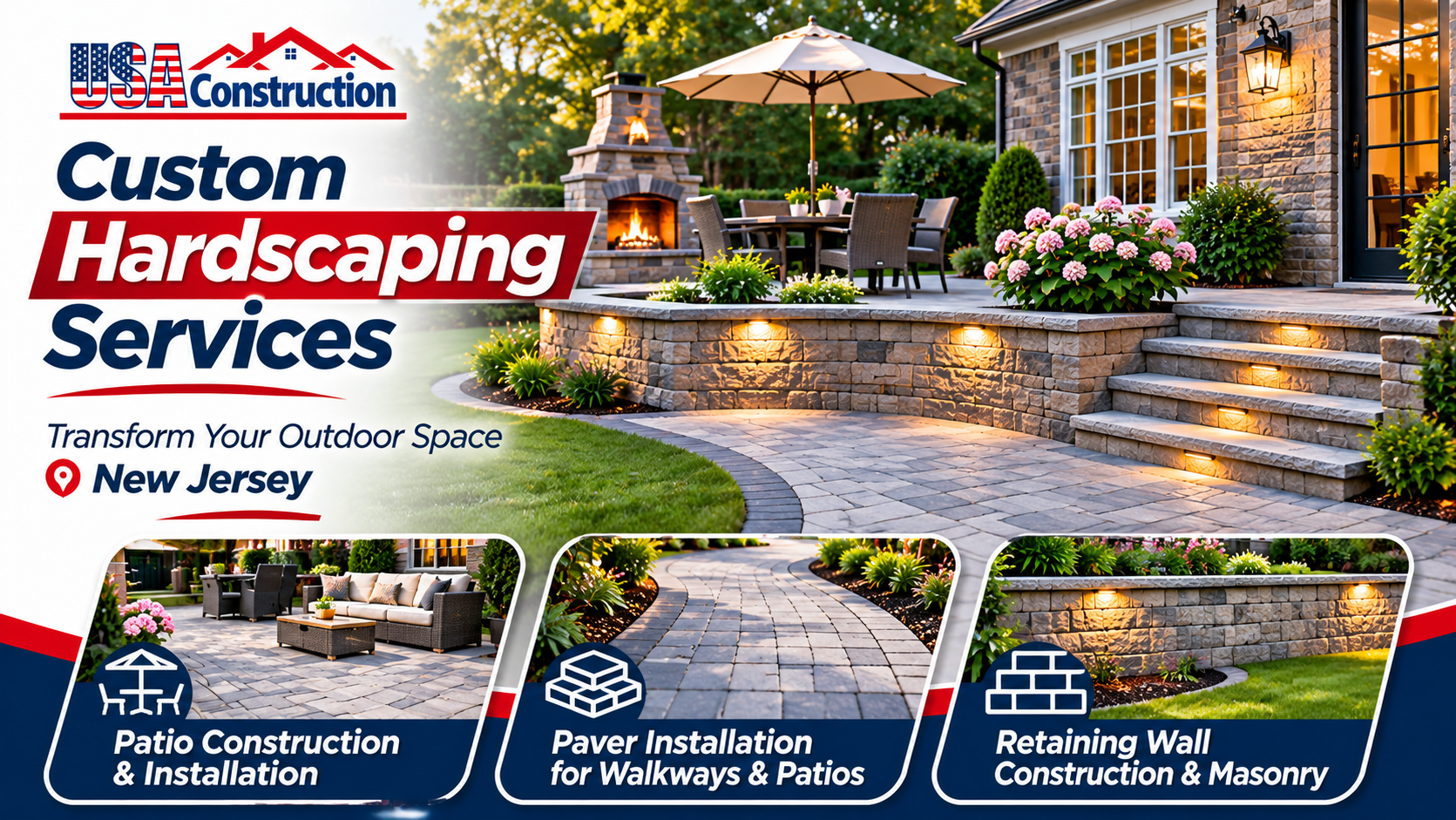
Services that USA Construction LLC offers for the construction of hardscapes include construction and masonry for patios, pavers, retaining walls and brickwork. It is important that all the factors associated with the property be taken into account in each individual project.
Patio Construction & Installation
Patios define areas outside where you can have meals and entertain. The choice of materials, the condition of the soil, and the right slope are vital in ensuring that the patio has an even surface.
Paver Installation for Walkways & Patios
Pavers give you design options for outdoor surfaces. You can pick from colors, shapes and patterns to match any property style. When you do a base prep and place the pavers correctly it helps reduce shifting, unevenness and other installation concerns.
Retaining Wall Construction & Masonry
Retaining walls are used to deal with sloping areas, level off landscape, and retain the soil when there is an elevation difference. Brick and masonry are also used to provide aesthetic appeal to outdoor structures, structural design and proper drainage are very important for these structures.
Frequently Asked Questions (FAQs)
Why do newly installed paver patios and walkways sink or become uneven after a New Jersey winter?
Pavers shift and sink when the underlying gravel base is improperly compacted or too thin to support frost heave. In New Jersey, winter ground freezing causes wet sub-soil to expand, pushing unanchored pavers upward. When spring thaw occurs, poorly prepared base soil collapses unevenly under the weight of the hardscape. A long-lasting installation requires excavating down 6-12 inches, laying crushed dense aggregate, compacting the base in layers, and spreading polymeric sand between joints to lock out water intrusion.
How can a custom hardscape design solve standing water issues and prevent basement flooding?
Strategic hardscaping controls water flow by grading soil away from home foundations and directing runoff toward designated drainage zones. Hardscaping contractors install subtle pitch slopes on patios, embed discreet channel drains alongside paver edges, and integrate French drain systems beneath stone walkways. Redirecting heavy rainfall prevents pooling around basement walls, protecting structural foundation masonry from lateral water pressure and wet basement leaks.
What causes stone retaining walls to lean outward or bow after heavy rainfall?
Retaining walls fail when trapped groundwater builds up behind the masonry with no way to escape, exerting immense hydrostatic pressure against the structural blocks. Without proper subsurface drainage, such as clean gravel backfill, perforated drain pipe, and weep holes along the wall base; the saturated soil expands against the wall. Over time, this force pushes stones out of alignment, causing visible leaning, bulging, and eventual wall collapse.
What is the primary operational difference between hardscaping and softscaping in outdoor design?
Hardscaping refers to the non-living, heavy structural elements of a landscape built from stone, brick, concrete, pavers, or wood, including patios, walkways, stoops, and retaining walls. Softscaping encompasses all living horticultural elements, such as lawns, shrubs, trees, flower beds, and mulch. Integrating both creates a balanced outdoor environment where structural hardscapes provide functional living zones and softscaping provides natural framing and color.
Why is proper slope pitch critical when building concrete paver or stone patios?
A patio must be pitched at a precise gradient, typically a quarter-inch drop for every foot of surface length away from the house to ensure rainwater drains naturally off the hardscape. Without a gentle outward slope, rainwater pools in the center of the patio or flows backward against the home foundation wall. Standing water erodes paver joint sand, creates severe winter ice hazards, and causes water intrusion inside lower living areas.
What primary variables dictate the overall cost of a residential hardscaping project in New Jersey?
Hardscaping costs depend on total square footage, selected building materials, site excavation difficulty, slope correction needs, and integrated drainage solutions. Natural stone like bluestone or granite requires higher material and skilled masonry investment compared to standard concrete pavers. Additionally, properties with steep grade shifts require structural retaining walls, soil grading, and heavy machinery access, which increases labor and site preparation costs.
Why is polymeric sand superior to regular joint sand for outdoor paver installations?
Polymeric sand contains specialized polymer binders that harden into a flexible, weather-resistant joint seal when activated with water. Unlike plain silica sand, which easily washes away during heavy rainstorms, polymeric sand locks pavers together tightly. It prevents weed seeds from taking root in joint gaps, stops burrowing insects like ants, and keeps rainwater from saturating the gravel base underneath.
When does a retaining wall require specialized structural engineering and municipal permits in New Jersey?
In most New Jersey municipalities, retaining walls over 4 feet in height require formal engineering plans, soil load calculations, and municipal building permits before construction begins. Taller walls hold back massive soil tonnage and require specialized internal reinforcement, such as geogrid mesh layers embedded deep into the hillside, heavy-duty footing bases, and calculated backfill drainage to ensure long-term stability under heavy load conditions.
What specific masonry and hardscaping construction services does USA Construction NJ provide?
USA Construction LLC delivers complete residential and commercial hardscaping solutions across New Jersey, specializing in custom paver patio installation, stone walkway construction, structural retaining walls, brick stoops, fire pits, outdoor steps, and fencing services etc. Our team handles the entire process from initial site assessment and drainage planning to excavation, base preparation, and precision masonry finishing.
Should concrete pavers and natural stone patios be sealed after installation?
Sealing hardscapes coats porous stone and concrete with a protective moisture barrier that repels oil spills, food stains, leaf tannins, and winter deicing salts. Applying a breathable sealer every 2 to 3 years prevents color fading from ultraviolet sun exposure and blocks water from soaking into microscopic pores, significantly reducing freeze-thaw surface pitting and scaling during winter months.
What are the advantages of natural bluestone over manufactured concrete pavers for New Jersey patios?
Natural bluestone offers dense structural strength, unique color variations, and exceptional longevity that withstands harsh climate shifts without losing color integrity. Manufactured concrete pavers, while offering uniform shapes and lower material costs, can fade slightly over decades of direct sun exposure. Bluestone provides a classic, high-end architectural finish that enhances NJ home values, though it requires precise stone cutting during installation.
How do professional hardscapers fix sunken paver walkways and eliminate trip hazards?
Sunken paver walkways are restored through targeted lift-and-relay procedures. Masons remove shifted pavers, dig out compromised or eroded base sand, lay a fresh layer of crushed stone, compact the base thoroughly, and re-bed the pavers perfectly level with surrounding surfaces. Sweeping fresh polymeric sand into joints and compacting the surface eliminates trip hazards while restoring proper water drainage away from entryways.
How does winter deicing salt damage concrete paver patios and stone steps?
Rock salt and chemical deicers contain sodium chloride or calcium chloride, which lower water freezing points and increase destructive freeze-thaw cycles inside porous hardscape materials. Salt also draws extra water into concrete pores, where freezing ice breaks down internal cement binders, causing surface flaking, pitting, and crumbling. Using calcium magnesium acetate or clean sand for winter traction protects hardscape surfaces from chemical breakdown.
What site considerations are necessary when integrating a custom masonry fire pit into a paver patio?
Installing a fire pit requires non-combustible underlying base materials, safe clearance from wooden structures or overhanging trees, and dedicated heat shields or firebrick liners to protect surrounding decorative pavers from cracking under high heat. Proper base preparation ensures the heavy masonry structure does not settle unevenly into patio sand, maintaining structural stability and safe ventilation for wood-burning or gas fire pits.
What key credentials should homeowners verify before hiring a New Jersey hardscaping contractor?
Homeowners should verify that the contractor holds active New Jersey Home Improvement Contractor licensing, carries comprehensive general liability and workers’ compensation insurance, and provides detailed written estimates outlining excavation depth, base material specifications, and drainage plans. Asking for a portfolio of local completed projects and verifying experience with local soil conditions ensures the contractor can handle complex site grading and structural masonry.
Why are custom stone patios becoming more popular than traditional wooden decks for outdoor living spaces?
Patios built from natural stone or concrete pavers require significantly less annual maintenance than wooden decks, which require frequent staining, sealing, board replacement, and pest treatments. Stone hardscapes provide superior load-bearing strength, rot resistance, and fire safety while lasting decades without structural warping. Patios also blend seamlessly with surrounding gardens and yard grading, creating ground-level entertaining zones.
How do permeable pavers help manage heavy stormwater runoff on residential New Jersey properties?
Permeable pavers feature widened joint gaps filled with small crushed aggregate, allowing rainwater to drain instantly straight down into the sub-base rather than rushing across the surface into storm drains or yard low spots. This stone drainage reservoir filters water naturally back into the local groundwater table, preventing surface pooling, reducing soil erosion, and meeting municipal impervious surface coverage regulations.
What is the difference between poured concrete retaining walls and modular masonry block walls?
Poured concrete walls create a monolithic vertical barrier but require extensive formwork, steel rebar reinforcement, and precise curing, making repair difficult if cracking occurs from ground movement. Modular masonry block and stone walls consist of individual interlocking units set on a flexible gravel base, allowing the wall to shift slightly with soil thermal movement without cracking, while offering richer aesthetic textures and easier section repairs.
Why is a pre-construction soil and elevation assessment necessary before laying hardscape foundations?
A pre-construction site assessment evaluates soil composition, underground utility locations, high-water tables, and natural slope angles. Clay-heavy NJ soils hold water longer and require deeper excavation and thicker gravel bases than sandy soils to prevent settling. Identifying water flow patterns early allows professional NJ masons to design correct slope angles and drainage channels before installing expensive patio stone.
What is the best time of year to schedule a hardscaping installation project in New Jersey?
Late spring through late autumn provides optimal ground and weather conditions for hardscape construction in New Jersey. Ambient temperatures remain well above freezing, allowing concrete, mortar, and polymeric sand to set and cure properly without frost disruption. Scheduling work before winter ensures base soils are dry enough for maximum compaction, creating a stable foundation for long-term patio and wall performance.
Contact USA Construction NJ for Your Hardscaping Project
Transforming your area starts with choosing items that match your home and what you need. If you are thinking about a patio, a path made of pavers, a wall to hold back earth or a masonry job, good design and skilled work are essential.
Call USA Construction LLC to talk about your building plans and find out more about hardscaping for your home!